GEOTECHNICALENGINEERING1
FORT LAUDERDALE

Geotechnical Engineering in Fort Lauderdale

Site investigations you can build on.

LEARN MORE

Fort Lauderdale sits on a limestone ridge between the Everglades and the Atlantic. That means your soil doesn't behave like inland Florida sand. High groundwater, solution cavities, and organic silts at shallow depth create a subsurface profile that demands a rigorous soil mechanics study long before the first pile goes in. We run index and strength tests under ASTM D1586 and D2487, and we interpret them against ASCE 7 load paths specific to coastal Broward County. A proper study here isn't just classification—it's the difference between a foundation that drains and one that slowly fails. Builders supplement our lab work with CPT testing when they need continuous stratigraphy in low-access urban lots, or with grain size analysis to verify fill suitability for raised slabs.

Water table at 1.5 meters changes bearing capacity calculations overnight. A soil mechanics study here has to start with saturation, not dry strength.
Geotechnical Engineering in Fort Lauderdale
Technical reference — Fort Lauderdale

Our service areas

Local geology

The shallow aquifer in Fort Lauderdale sits roughly 1.5 to 2 meters below grade in the wet season. That number changes everything. Our soil mechanics study begins with undisturbed sampling and immediate moisture-content stabilization to preserve the in-situ structure of the porous Miami Limestone and overlying Pamlico Sand. We measure shear strength via triaxial compression on saturated specimens because the phreatic surface here rarely drops below the zone of influence for shallow footings. Consolidation parameters matter too—organic lenses in the Fort Lauderdale Formation can compress differentially under even moderate bearing pressures. Contractors working near the New River or Tarpon River often request retaining wall design parameters early in the study, since excavation support becomes critical when the water table is that close to the bottom of the dig. Every report includes Atterberg limits, grain-size distribution per ASTM D422, and direct shear on recompacted samples when fill is part of the grading plan.

Applicable standards

ASTM D1586 – Standard Penetration Test, ASTM D2487 – Unified Soil Classification System, ASTM D4318 – Atterberg Limits

Need a geotechnical assessment?

Reply within 24h.

Email: contact@geotechnicalengineering1.sbs

Watch the video

Why choose us

A six-story condominium on a former mangrove site west of US-1. The geotech showed 4 meters of compressible peat under 1 meter of sand fill. The structural engineer had already sized footings for 200 kPa bearing. Without a soil mechanics study that flagged the organic layer, differential settlement would have cracked the slab within two wet seasons. That’s the real risk in Fort Lauderdale: the surface looks like clean sand, but the layer underneath can be highly compressible, acidic, and variable in thickness over just a few meters. Sampling at 1.5-meter intervals caught the transition. We recommended over-excavation and a compacted select fill pad, verified by Proctor and sand cone density testing. The soil mechanics study paid for itself before the first concrete pour.

Typical values

ParameterTypical value
Standard Penetration Test (SPT)ASTM D1586, N-value corrected for overburden
Soil ClassificationASTM D2487 (USCS), visual-manual ASTM D2488
Atterberg LimitsASTM D4318 – liquid limit, plastic limit, plasticity index
Grain Size DistributionASTM D422 / D6913 – sieve + hydrometer
Direct Shear StrengthASTM D3080 – drained, saturated at field density
ConsolidationASTM D2435 – one-dimensional, load-unload increments
Organic ContentASTM D2974 – loss on ignition, critical for muck layers
Corrosivity SuitepH, resistivity, sulfates, chlorides per AASHTO T-290

Common questions

How many borings do I need for my Fort Lauderdale lot?

Broward County typically requires one boring per 2,500 square feet of building footprint, with a minimum of two for any structure over 1,000 square feet. Depth must extend to at least twice the foundation width below the bearing elevation, or to refusal on limestone. We coordinate directly with the drilling crew and can have samples in the lab the same day.

What does a soil mechanics study cost for a single-family home?
How fast can I get the report after sampling?

Index properties and classification: 3 business days. Adding direct shear or consolidation: 5 to 7 business days. We run moisture content immediately to stop drying artifacts, and we can email preliminary bearing capacity values within 48 hours if the contractor is waiting to order concrete.

Do you handle the drilling or just the lab testing?

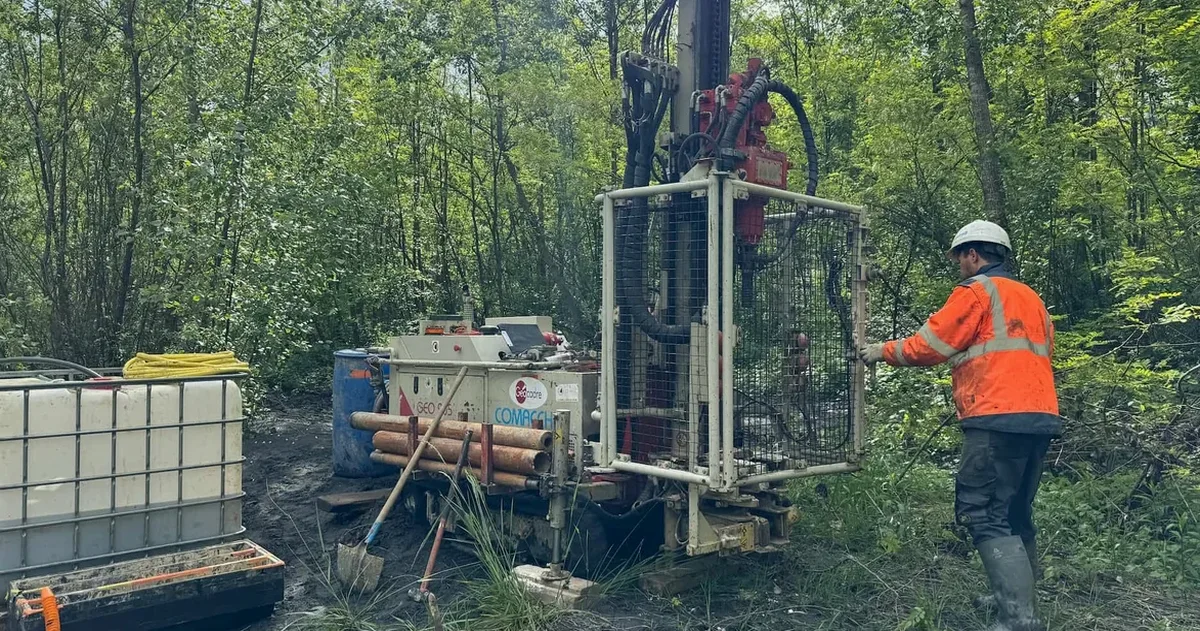
We manage the entire process. Our field crew brings a CME-55 track rig or a portable SPT tripod for tight access, logs the strata on site, and transports undisturbed samples in sealed Shelby tubes to our lab. You get one point of contact from drilling to final report.

What happens if you hit limestone near the surface?

It’s common in eastern Fort Lauderdale. When the SPT hammer refuses on Miami Limestone, we log the refusal depth, switch to rock coring if needed, and assess the rock quality designation. The report includes recommendations for socketed footings or drilled shafts if the limestone is pinnacled or contains solution cavities.

Location and service area

We serve projects across Fort Lauderdale and surrounding areas.

View larger map